(be)longing began with an unexpected sense of connection to the Outer Banks—a feeling of recognition I couldn’t quite explain. This piece holds both that initial wonder and the growing awareness that beauty and belonging here are layered and complex. Through visible and hidden texts, it explores the tension between love of place and the histories and boundaries that shape who gets to belong.
acrylic on paper, graphite, pen, chalk pastel, metal foil, pollen, magazines, “Seacoast Plants of the Carolinas”, Outer Banks Current (Jan. 26, 1984 edition), on cradled board
40″ x 30″ x 1.5″
2025
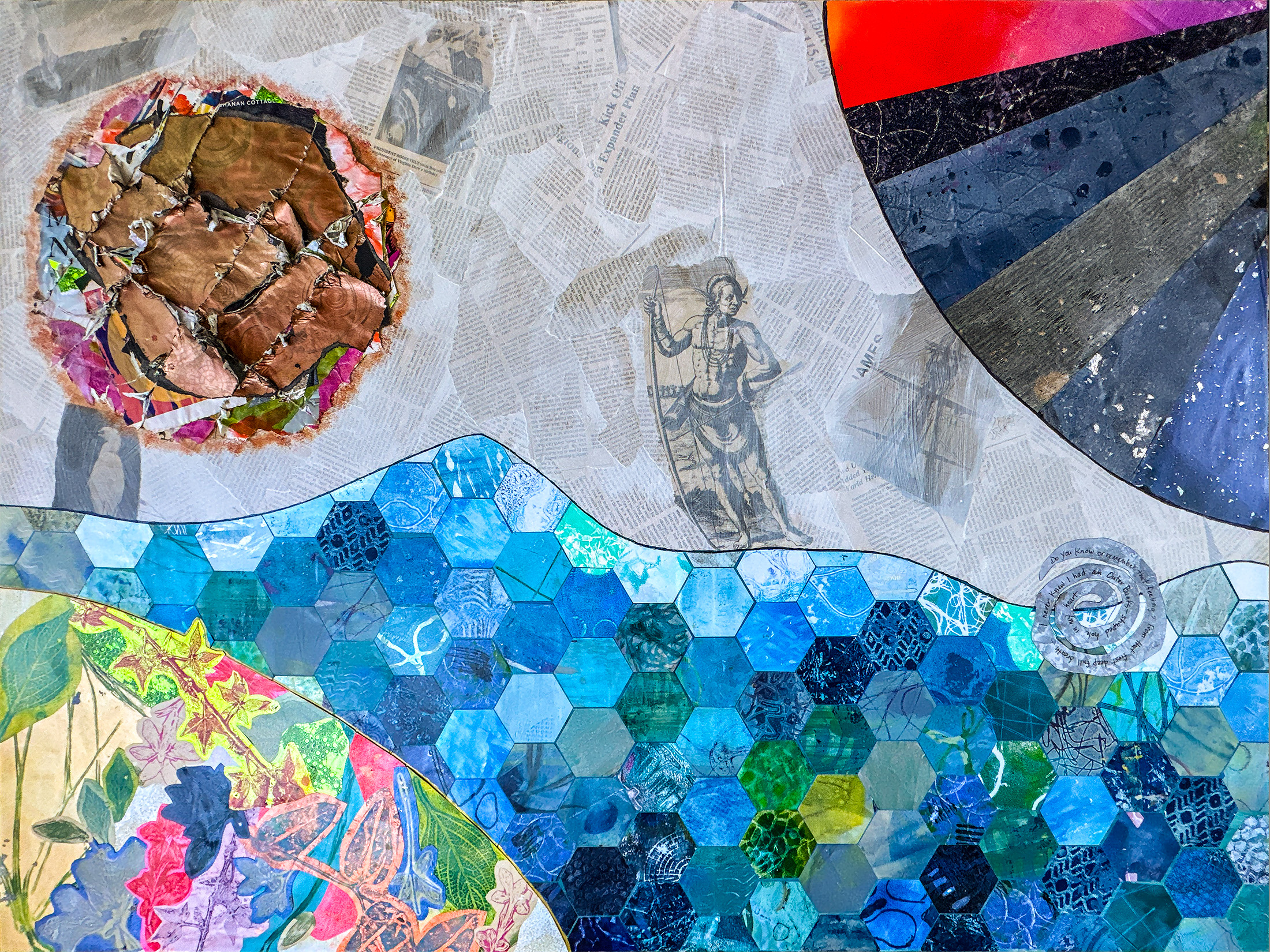
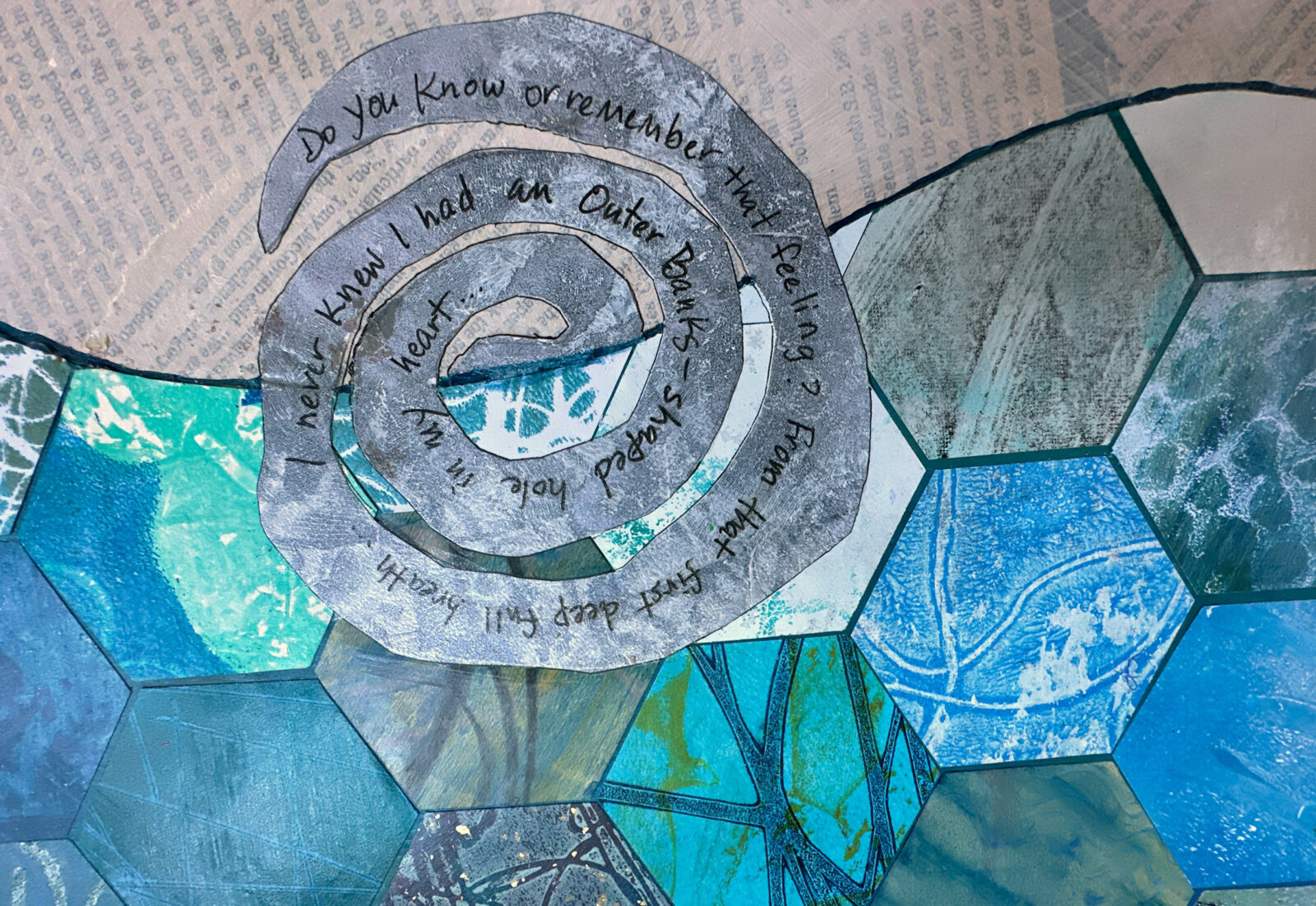
I never knew I had an Outer Banks-shaped hole in my heart.
That’s what I said the first time I came here. This piece, (be)longing, starts from that feeling—that sudden, intense connection to this place. It traces both the joy of that discovery and the slow realization that beauty and belonging are never simple.
The Outer Banks lures us with its light, color, and vastness—its skies and sunsets, lush vegetation, and abundant waters. It’s easy to fall in love. But with time, that love deepens—and complicates. The same seas are rising. The same sun that warms also blisters. Invasive vines choke native plants. Storms reshape the shorelines. And in the human landscape, subtler forces draw lines around who is “from here,” who gets to belong, whose histories are celebrated—or forgotten.
This piece holds those contradictions. The spiral text captures the hopeful beginning—the gratitude of finding connection and place. But under the surface, a nearly invisible layer of text asks harder questions: what remains when everything is stripped away?
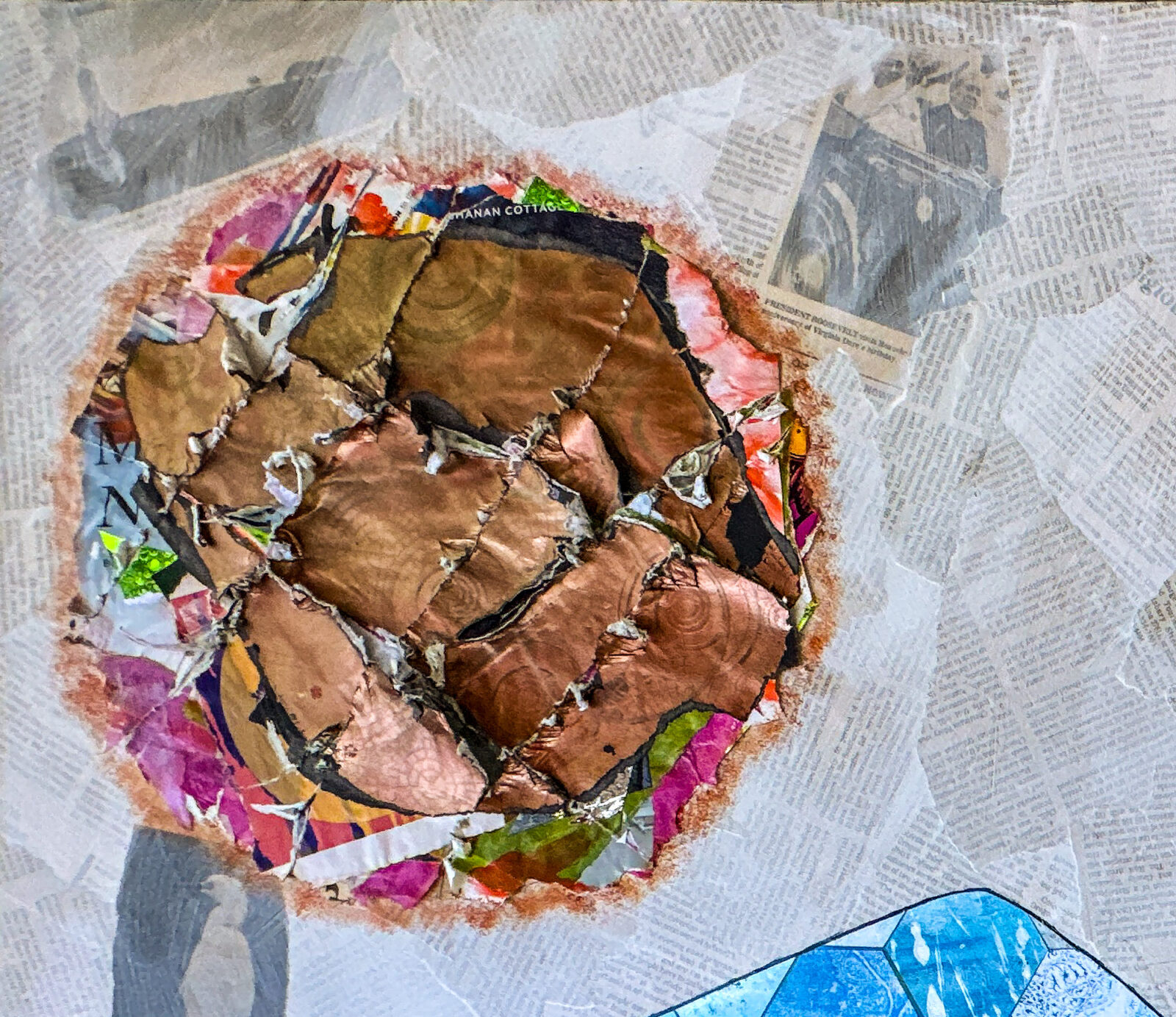
Collaged fragments from a 1984 issue of The Outer Banks Current commemorate the 400th anniversary of first contact—with all the discomfort of its colonial framing. Many articles echo concerns that still resonate today. Yet, people of color are notably absent from its pages.
These layered texts—some seen, some buried—mirror the complexity of place: the longing to belong, and the awareness of who has been excluded. (be)longing is an act of love, but not blind love. It’s love that looks deeper. It asks: What stories do we tell about a place? Who gets to be part of them? And how do we hold beauty and truth at the same time?